Baking Up Confidence, Creativity and Holiday Cheer
December 16, 2025 -
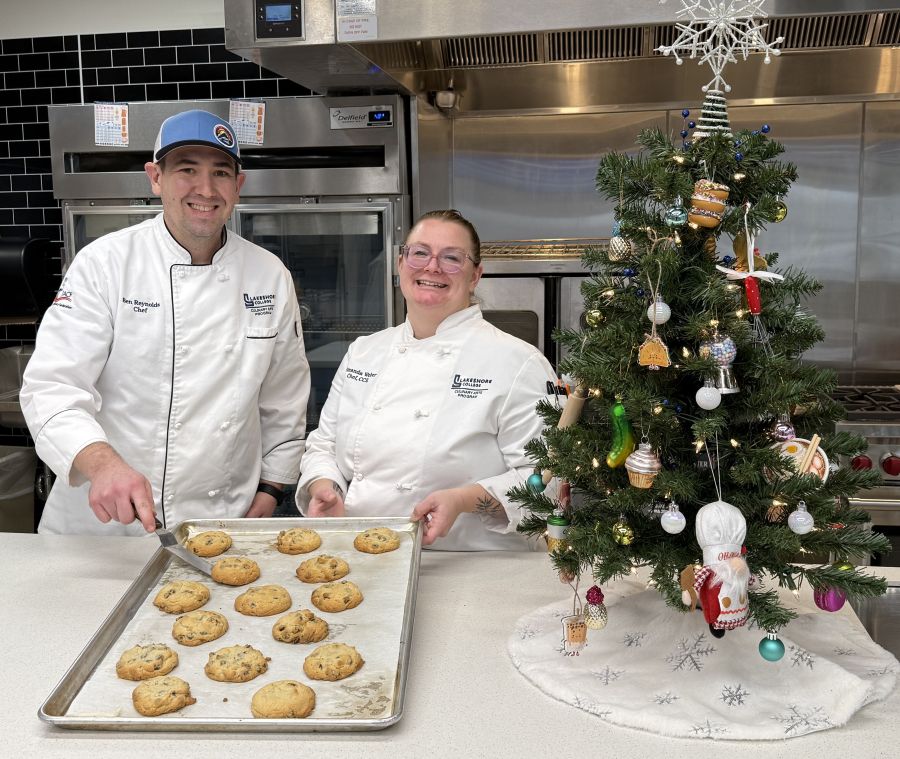
For many culinary students, baking is either a beloved comfort zone or an intimidating frontier. But at Lakeshore College, baking and culinary instructors Chef Ben Reynolds and Chef Amanda Weber see it as something much bigger: a foundation for real-world readiness.
“We want students to see baking as an essential part of their culinary toolkit. Not every restaurant has a dedicated pastry chef. Often, chefs are tasked with everything—from appetizers to dessert—so giving students the fundamentals helps prepare them for the realities of industry.”
-Chef Amanda Weber, Lakeshore College baking and culinary instructor
A Baking Program Designed for the Real World
Lakeshore’s culinary program includes two core baking courses: Introduction to Baking and Pastry, taught by Chef Ben, and Advanced Patisserie, taught by Chef Amanda. These classes ensure that every culinary graduate understands the essentials of baking—from precision in measurements to the chemistry of time, temperature, and technique.
For students who want to go deeper, Lakeshore also offers a Baking & Pastry Arts Certificate, which includes specialized courses such as:
- Bakeshop Operations – launching this spring, mirroring the hands-on learning approach of the college’s Chef’s Table restaurant.
- Pastry, Confections & Cakes – a deeper dive into refined techniques.
- Artisan Breads – an 8-week course open to the public, offered twice weekly to accommodate working adults.
“Time is the secret ingredient people forget,” Chef Amanda says. “In Artisan Breads, we teach why resting, fermenting, and scheduling matter—and why bread just can’t be rushed.”
Turn Your Passion for Baking Into a Career
Discover how Lakeshore College’s Baking and Pastry Certificate can help you develop professional skills and prepare for industry opportunities.
Learn MoreIn the intro class, Chef Ben starts with core skills: measurements, conversions, creaming methods, cookies, quick breads, and cakes. His class meets once a week for a six-hour lab—packed, but intentionally so.
“It’s a lot of time management,” he says. “Students learn how to schedule their day so everything finishes on time. Their products don’t have to be perfect to succeed—what matters is that they come prepared, participate, collaborate, and ask for help.”
Chef Amanda agrees. “We don’t grade on perfection. We grade on growth. Baking is an equalizer—there isn’t as much subjectivity as cooking. If your cookie recipe doesn’t work, there’s a reason, and that’s what we help students figure out.”
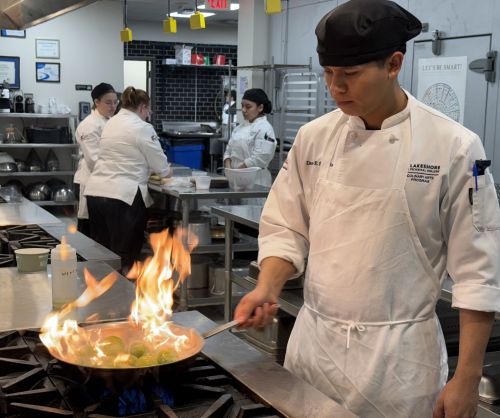
The instructors often see students discover unexpected strengths. One student, Ben recalls, started the semester saying he hated baking. “Then he finishes the class and he’s making sourdough and inventing his own recipes. That’s the best part for me.”
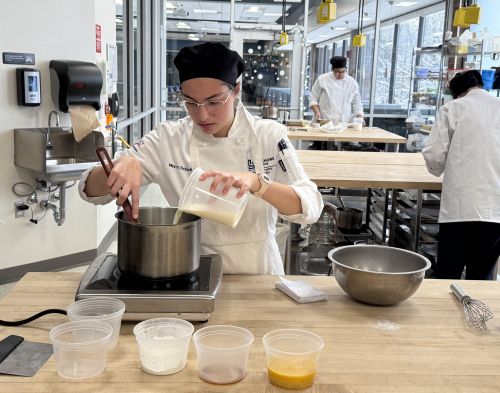
Breaking Down Industry Barriers
In the intro class, Chef Ben starts with core skills: measurements, conversions, creaming methods, cookies, quick breads, and cakes. His class meets once a week for a six-hour lab—packed, but intentionally so.
Many students enter the program identifying strongly as “culinary” or “baking.” But both instructors know the importance of appreciating both chef, and baker.
“We’re all in the same industry. We have to work together,” Chef Amanda explains. “Understanding how long a pastry takes helps future chefs build realistic schedules and expectations for their teams.”
This holistic view helps students uncover what they love—and what they don’t—while gaining a deeper respect for each discipline.
Holiday Baking Tips from the Pros
With the holiday season approaching, we couldn’t miss the opportunity to have our chefs share their holiday baking do’s and don’ts. Their tips are simple, practical, and full of personality.
- Plan Ahead
“Not everything has to be made in one day,” Chef Ben says. “Freeze doughs, prep ahead—spread the work out.”
- Freeze Your Cut-Out Cookies
For cleaner edges on sugar cookies or gingerbread pieces, Chef Amanda recommends freezing the shapes before baking.
“You want the exterior to set before the inside warms up. Frozen dough keeps those sharp lines.”
- Use Royal Icing Mix
Those smooth, glossy decorated cookies on social media? They’re almost always made with powdered royal icing mix.
“It dries faster and firmer,” Chef Amanda adds. “And it still tastes great.”
- Stabilize Your Whipped Cream
Ben’s secret: bloom gelatin.
“It keeps whipped cream from melting at room temperature. Nursing home bakers taught me that trick—it works,” he confesses.
- Speed-Scratch Is Totally OK
Both chefs swear by smart shortcuts.
“Add an extra egg yolk, milk instead of water, and a little espresso powder to a boxed brownie mix,” Chef Amanda shares. “It tastes homemade—and nobody has to know.”
Chef Ben also uses cake mixes to make cookies. “Just leave out the water. Add chips, dried fruit, whatever you want. They bake beautifully.”
- Make It Fun—Not Stressful
Holiday baking should be joyful, not pressure-filled.
“Use shortcuts. Skip traditions you don’t have time for. Make the things your family loves—or don’t,” Chef Amanda laughs. “It should come from a place of joy, not obligation.”
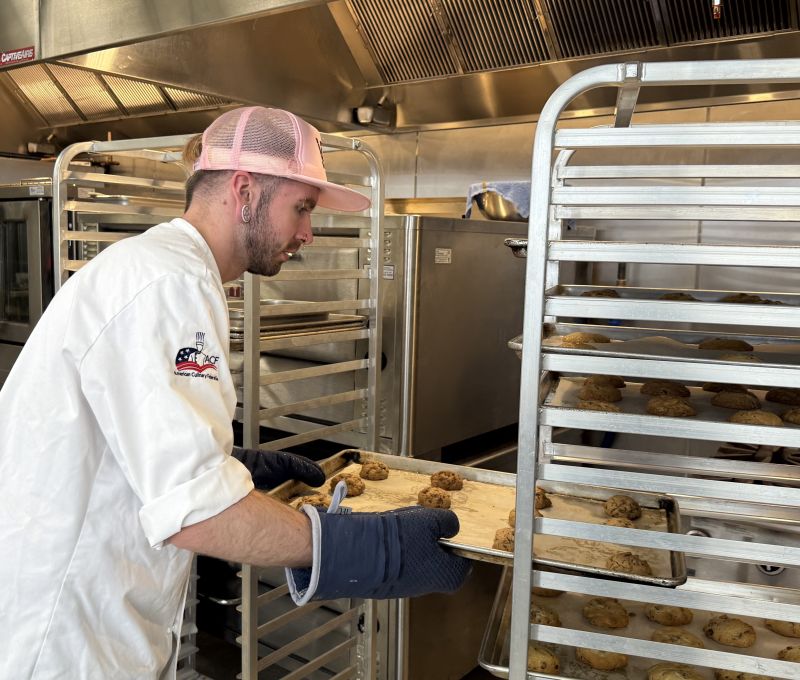
Family Traditions & Sweet Memories
Both chefs draw from their own family traditions, too.
Chef Amanda makes Italian anise cookies every year—despite disliking them herself. “It’s my husband’s favorite. I do it out of love,” she shares.
Chef Ben on the other hand makes an old-fashioned English-style baked pudding from his mom’s recipe, along with a closely guarded family cookie recipe from his mother-in-law.
“Some things are just nostalgic,” he says. “Even as a professional baker, the recipes from home still matter most.”